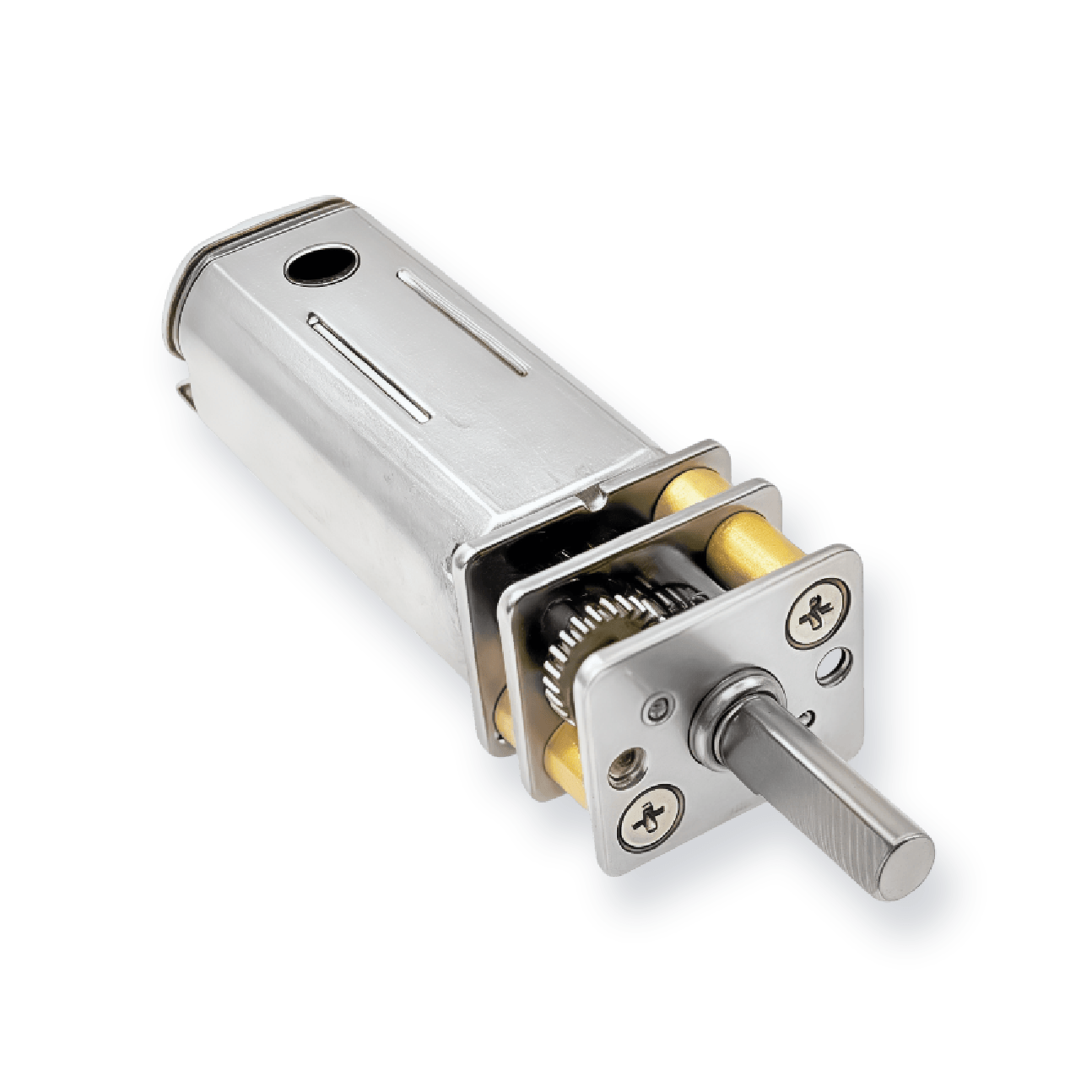
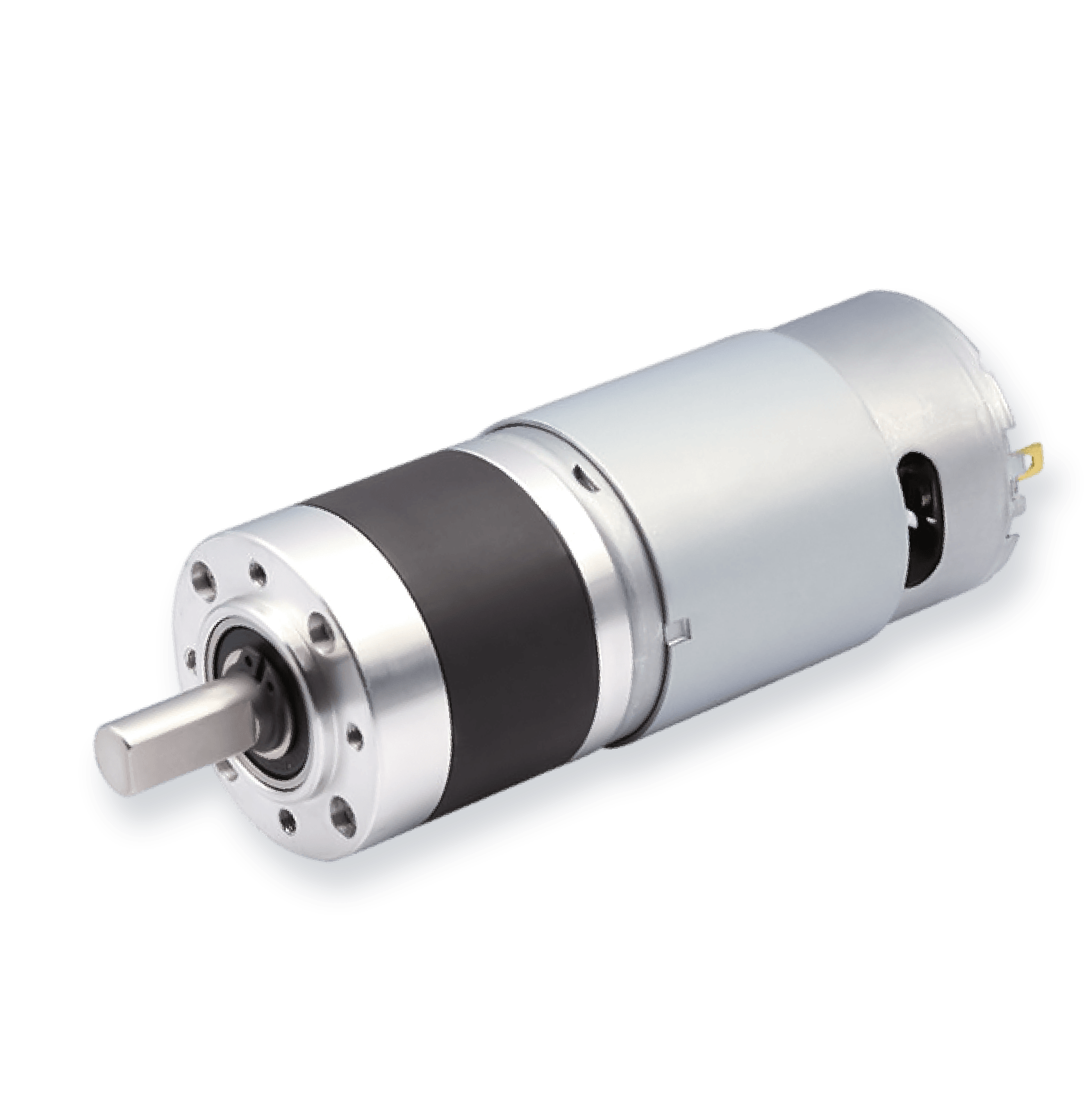
Worm Gear Motors and Self-Locking: When You Need Holding Force Without a Brake
-
 2026.07.06
-
Technology


A worm gear motor can hold a load in position indefinitely with the power completely off — no brake, no clutch, no extra current draw. This happens because of the geometry of the worm-and-wheel mesh, not because of any added component, and it only works reliably when the lead angle stays below the friction angle of the material pair. Get that geometry wrong, and your ‘self-locking’ gearbox will happily backdrive the moment gravity or vibration pushes back.
What Self-Locking Actually Means (It’s Not Magic, It’s Friction)
Here’s the thing most datasheets don’t explain well: self-locking in a worm gear isn’t a special feature you switch on. It’s a byproduct of how steep the worm’s thread angle is relative to the friction between the worm and the gear wheel.
In a standard gear pair — spur, planetary, bevel — torque can flow both directions with roughly the same efficiency. Push the output shaft, and the input shaft spins. That’s called backdriving. A worm gear breaks this symmetry. The worm (input) can drive the wheel (output) easily, but the wheel trying to drive the worm has to fight friction at a much steeper mechanical disadvantage.
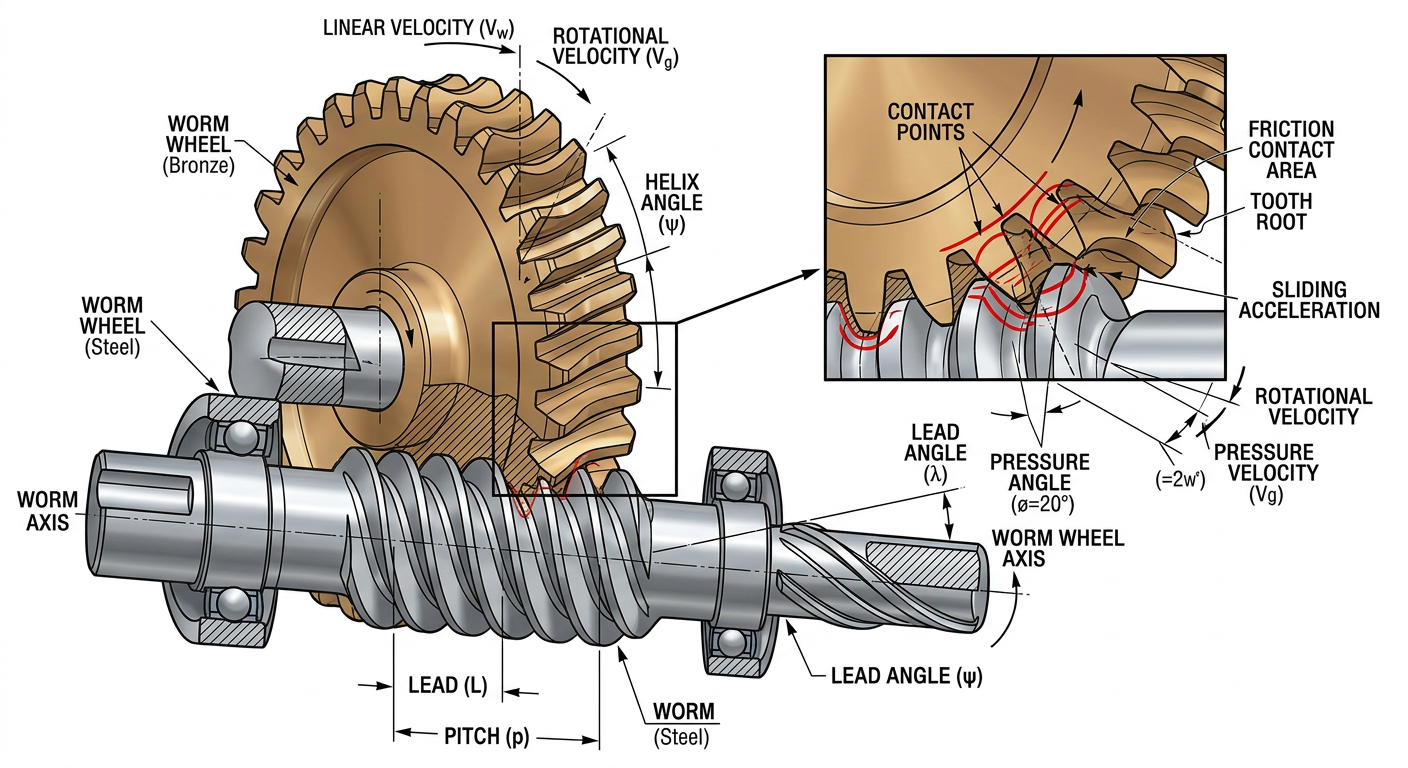
When the worm’s lead angle is small enough — generally under about 6 degrees for typical steel-on-bronze or steel-on-polymer pairs — the friction force exceeds the force trying to rotate the worm backward. Result: the output shaft physically cannot move the input shaft, no matter how hard you push. That’s self-locking.
The Lead Angle Threshold You Actually Need to Calculate
Don’t trust a supplier who says a gearbox is ‘self-locking’ without giving you a number. The rule of thumb: self-locking is reliable when the worm’s lead angle (λ) is less than the friction angle (φ), where tan(φ) = coefficient of friction (μ).
For a typical steel worm on a bronze wheel, μ sits around 0.1–0.15, giving a friction angle of roughly 6–8.5 degrees. So if your worm’s lead angle is under 6 degrees, you’re in genuinely self-locking territory. Push it to 10-15 degrees for higher efficiency, and you lose the self-locking property — the gearbox will backdrive under enough load, especially with any vibration reducing effective friction.
Why This Matters for Your BOM
This is exactly why worm gear motors trade efficiency for holding force. A self-locking worm stage typically runs at 50-65% efficiency, compared to 85-95% for a planetary gear motor. You’re literally paying for the holding force in wasted energy during normal operation. If your application needs the motor running constantly rather than holding, that inefficiency adds up in battery drain and heat — something we cover in more depth in our guide to gear motor overheating.
Real-World Example: Electric Locks and Lift Actuators
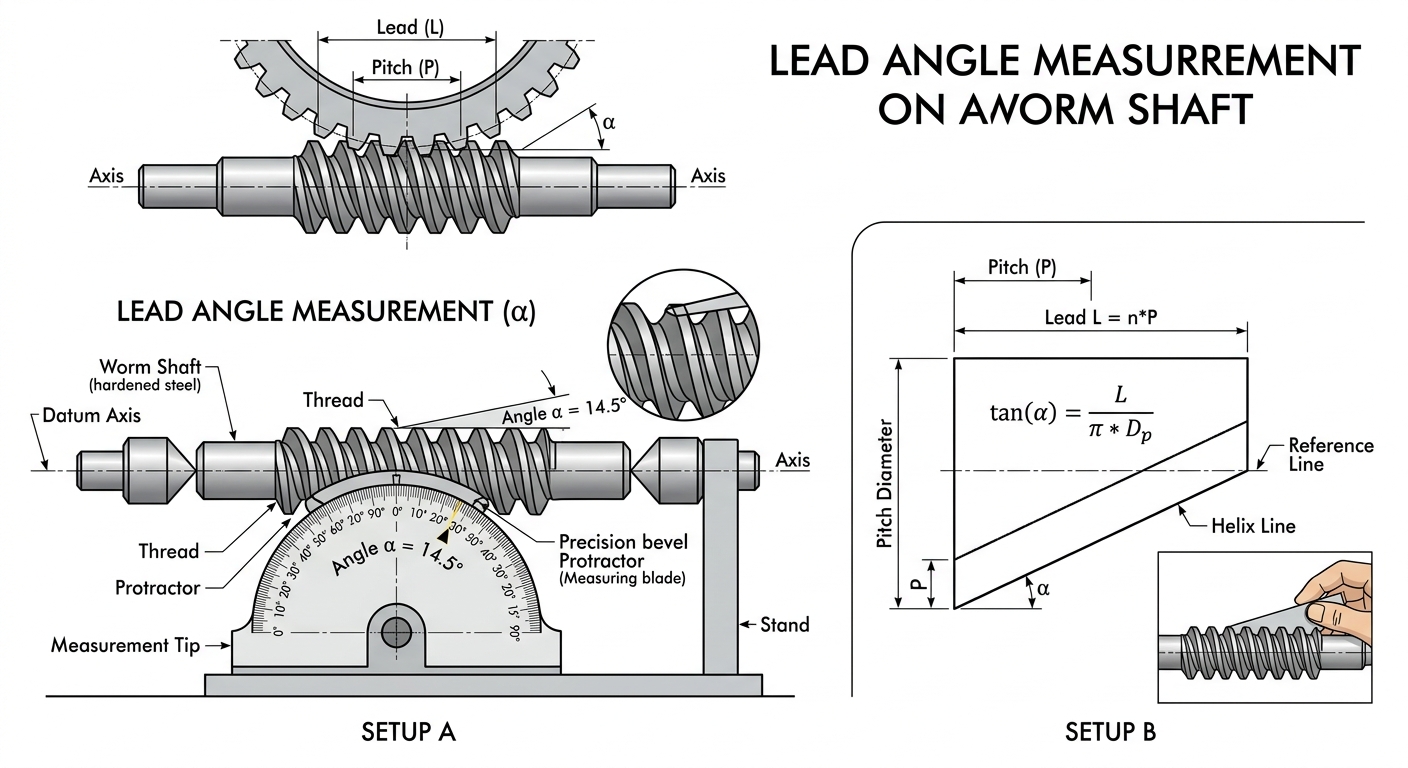
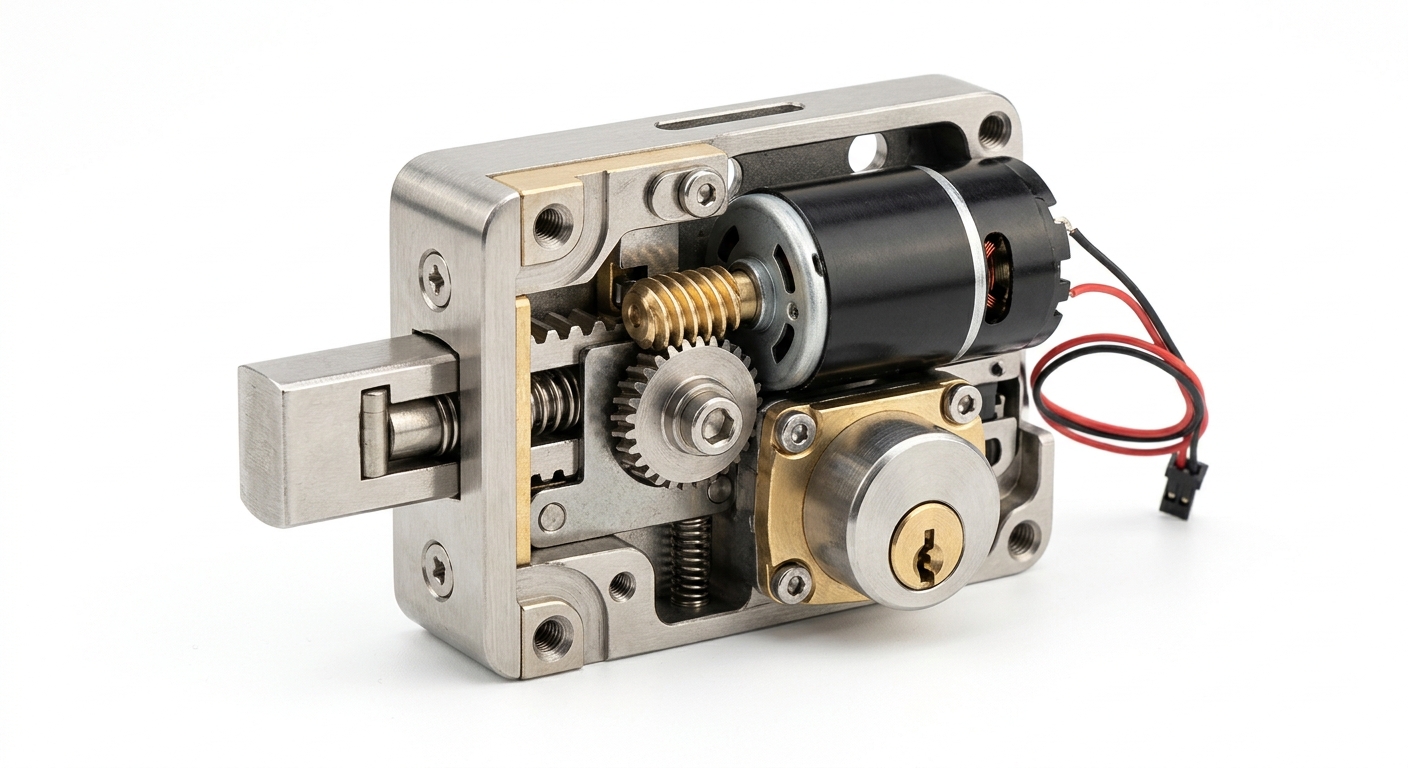
Consider an electric deadbolt lock. It needs to throw the bolt, then hold it locked — potentially for months — without drawing any standby current. A designer using a spur gear motor would need an added ratchet or solenoid latch to prevent the bolt from being forced back. Switch to a small worm gear motor with a sub-6-degree lead angle, and the bolt physically cannot be pushed back by someone jimmying the door. No standby power, no extra part.
The same logic applies to small lift actuators — think adjustable desk risers, medical bed height adjusters, or camera gimbal tilt mechanisms. The load (desk surface, patient weight, camera mass) is constantly trying to backdrive the actuator through gravity. A self-locking worm gear motor holds that position the instant power cuts, which matters a lot for safety-critical equipment where a power failure shouldn’t mean a sudden drop.
For instance, a medical equipment OEM building a height-adjustable exam table used a worm gear motor specifically because regulatory testing required the table to hold position during a simulated power loss — a spur or planetary design would have needed a separate mechanical brake to pass that test.
When Self-Locking Fails: Vibration, Wear, and Reverse Torque Spikes
Self-locking isn’t bulletproof, and treating it as an absolute guarantee is a common design mistake. Vibration is the biggest threat — it momentarily reduces the effective friction coefficient at the mesh, and under sustained vibration (think a worm gear motor mounted on a vibrating platform or in a power tool), the lock can chatter loose in tiny increments.
Wear is the second threat. As the worm wheel teeth wear down over thousands of cycles, contact geometry shifts and the effective friction angle can change. A gearbox that was reliably self-locking at 500 hours might start creeping at 5,000 hours if it’s undersized for the load or poorly lubricated.
Also watch for reverse torque spikes — a sudden shock load (someone slamming a gate that’s held by a worm gear motor, for example) can momentarily exceed the static friction holding threshold before settling back. If your application involves shock loads rather than steady gravity loads, don’t rely on self-locking alone — add a mechanical stop or secondary brake as a safety factor.
Worm Gear vs Planetary + Brake: Which One Should You Actually Spec?
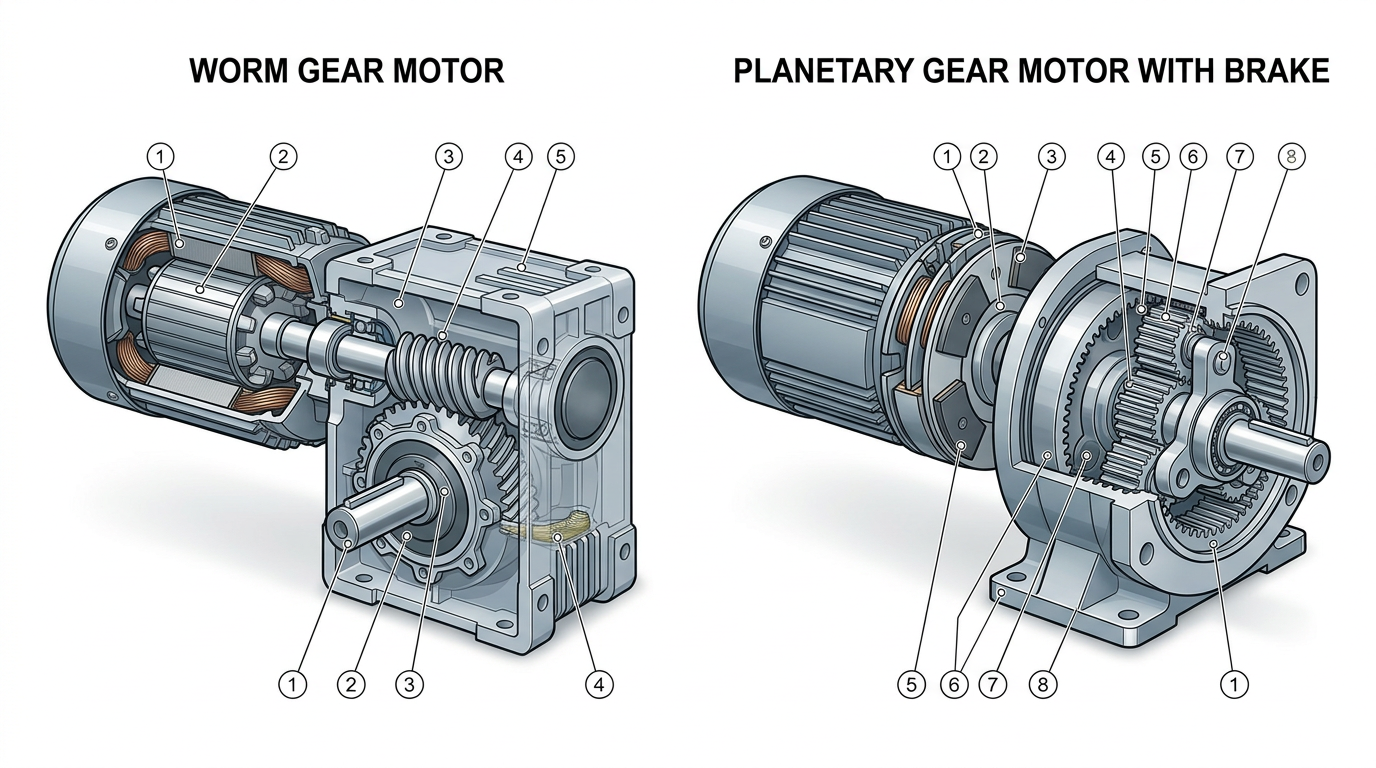
If holding force is your only requirement and efficiency doesn’t matter much, worm gear self-locking wins on simplicity and cost — one part does the job of two. But if your application needs both high efficiency during motion and holding force at rest, a planetary gear motor with an add-on electromagnetic brake is usually the better engineering choice, even though it costs more and takes more axial space.
We break down the full three-way comparison — including noise, backlash, and gear ratio range — in our planetary vs spur vs worm gearbox comparison. But the short version for holding-force decisions: worm gear self-locking is free (no added part), planetary+brake is precise and efficient but costlier, and spur gear alone should never be your answer if load-holding matters.
A Quick Gut-Check
- Need silent holding with zero standby power and can tolerate 55-65% efficiency? Worm gear.
- Need high-speed, high-efficiency operation plus occasional precise holding? Planetary + brake.
- Load is light and backdrive risk is low? Spur gear may still be fine — check your actual holding torque math first.
How to Verify Holding Torque Before You Commit to a Design
Don’t just take a datasheet’s word for ‘self-locking’ — verify the actual holding torque your specific load requires versus what the worm gear motor can sustain. Calculate the static torque your load applies at the output shaft (weight × moment arm for a lift application, or spring preload for a lock mechanism), then compare it against the manufacturer’s rated holding torque, derated by at least 20% for wear and temperature variation over the product’s life.
If you’re also managing position feedback alongside holding force — say, a valve actuator that needs to know its exact position and hold it — pairing a worm gear motor with encoder feedback is worth considering. See our encoder motor feedback guide for how to choose between incremental, absolute, and Hall sensor options for that combination.
And if your torque and speed numbers are still rough estimates at this stage, go back to fundamentals first — our guide on torque and speed specs walks through the calculations you need before selecting any gearbox type, worm included.