Brushed vs Brushless DC Motors in 2026: A Buyer’s Decision Framework
-
 2026.05.29
-
Buying Guides


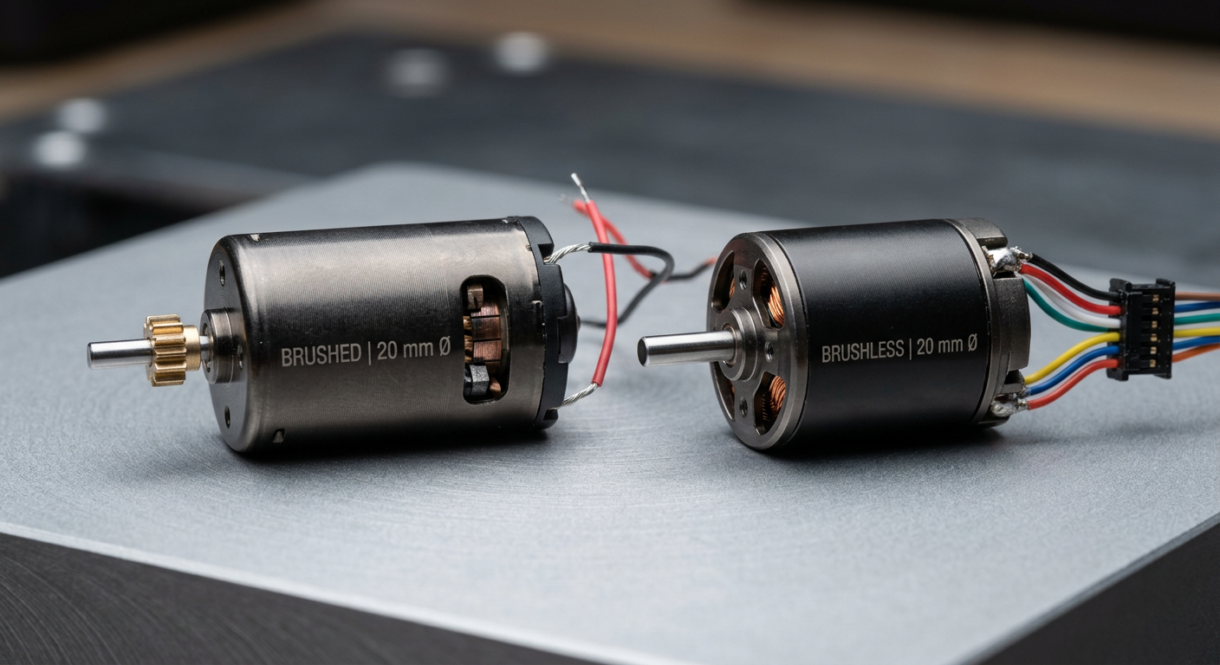
Choose a brushed DC motor when cost, simple control, and short operating cycles matter most. Choose a brushless DC motor (BLDC) when the application requires longer service life, higher efficiency, lower electrical noise, or more advanced speed and position control.
For most buyers, the decision is not simply “which motor performs better?” It is whether the motor architecture matches the product’s actual duty cycle, expected lifetime, control electronics, noise limits, available space, and total cost of ownership.
This brushed vs brushless DC motor comparison provides a practical framework for evaluating those trade-offs before you select a motor, gearbox, encoder, or driver for an OEM application.
The 30-Second Answer: Brushed or Brushless?
A brushed DC motor is usually the better choice when the product:
- Runs for only seconds or minutes at a time
- Has a strict motor cost target
- Needs simple on/off, direction, or PWM speed control
- Does not require exceptionally low noise or long continuous life
A brushless DC motor is usually the better choice when the product:
- Operates continuously or for several hours per day
- Must remain in service for many years
- Needs higher efficiency or longer battery runtime
- Operates near sensitive electronics, microphones, or wireless modules
- Requires precise speed, torque, or position control
The difficult cases are applications that need quiet operation and moderate daily use but still have a demanding BOM target. In those situations, buyers need to evaluate the complete motor system rather than comparing motor prices alone.
For a broader overview of available motor architectures, see our complete guide to DC motor types.
How Brushed and Brushless DC Motors Work
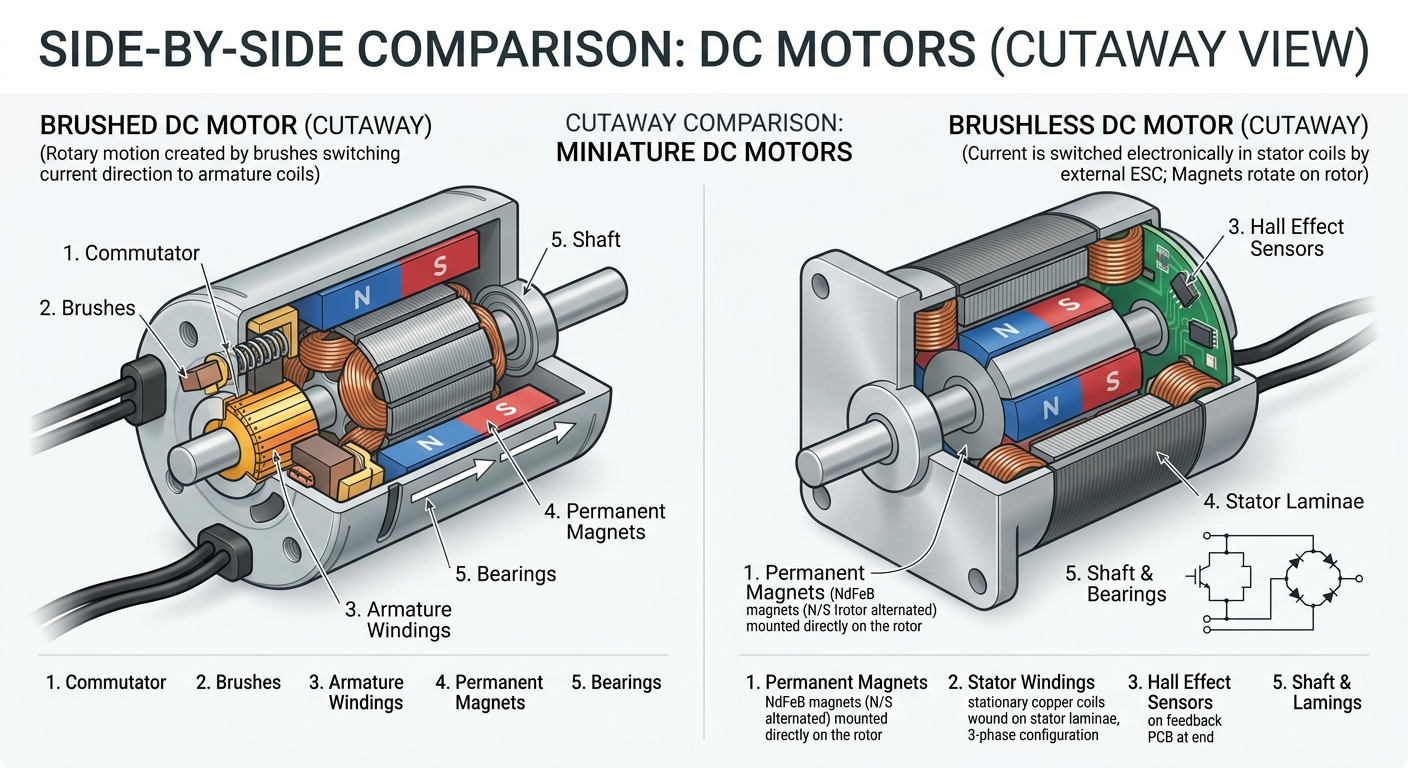
The primary difference is how current is switched through the motor windings. That single architectural decision affects service life, efficiency, heat, electromagnetic interference, control requirements, and system cost.
Brushed DC Motor: Mechanical Commutation
A brushed DC motor uses carbon or precious-metal brushes that contact a rotating commutator. As the rotor turns, the brushes and commutator mechanically switch current through the rotor windings.
The main advantage is simplicity. A brushed motor can rotate directly from a suitable DC power supply. Basic speed control can be achieved with PWM, while reversing the polarity changes the direction of rotation.
Bidirectional control, current limiting, braking, or closed-loop operation may still require an H-bridge, motor driver, encoder, and controller. However, the electronics are generally simpler than those required for a three-phase BLDC motor.
The disadvantage is physical wear. The brushes continuously contact the commutator, creating friction, electrical arcing, heat, particles, and electromagnetic noise. Over time, brush and commutator wear limits the motor’s service life.
Brushless DC Motor: Electronic Commutation
A brushless DC motor places permanent magnets on the rotor and windings on the stator. Instead of using brushes, an electronic driver switches current through the motor phases in the correct sequence.
Rotor position can be detected using Hall sensors, an encoder, or sensorless back-EMF measurement. The appropriate method depends on the required startup behavior, speed range, positioning accuracy, available space, and system cost.
Because there is no brush-to-commutator contact, BLDC motors avoid brush wear and electrical arcing. They can therefore provide longer life, higher efficiency, lower maintenance requirements, and cleaner operation.
The trade-off is that a BLDC motor cannot normally be connected directly to a simple two-wire DC supply. It requires a compatible controller or integrated driver to perform electronic commutation.
The practical distinction is straightforward: brushed motors keep the commutation mechanism inside the motor, while brushless motors transfer commutation to the electronic control system.
Lifespan and Maintenance Differences
Service life is often the most important practical difference between brushed and brushless DC motors.
Many miniature brushed motors provide approximately 1,000–3,000 operating hours under suitable rated conditions. Some coreless brushed motors or specially designed brush systems may achieve longer life, while high current, frequent starting, excessive heat, vibration, contamination, or overload can shorten it substantially.
A properly selected BLDC motor may provide 10,000 operating hours or more because there are no brushes to wear. In this case, service life is more commonly determined by bearings, lubrication, winding temperature, mechanical loading, gearbox wear, and control-electronics reliability.
These figures should be treated as reference ranges rather than guaranteed values. The actual lifetime of either motor type depends on:
- Continuous and peak torque
- Operating speed
- Duty cycle and start-stop frequency
- Ambient and winding temperature
- Radial and axial shaft loads
- Gearbox efficiency and loading
- Ingress protection and operating environment
- Motor manufacturing quality
For a mechanism that operates for only a few seconds per cycle, brush wear may never become the limiting factor. For continuous-duty pumps, fans, robots, and laboratory equipment, the longer potential life of a BLDC motor can significantly reduce field-service and replacement risk.
Brushed vs Brushless DC Motor Comparison
The following table summarizes the main differences. Exact performance depends on the motor size, winding, magnetic design, bearings, controller, gearbox, and operating point.
| Selection Criteria | Brushed DC Motor | Brushless DC Motor |
|---|---|---|
| Initial motor cost | Generally lower | Generally higher |
| Control electronics | Simple for basic operation | Requires electronic commutation |
| Typical efficiency | Often around 65–80% | Often around 80–90% or higher |
| Service life | Limited partly by brush and commutator wear | Usually limited by bearings, heat, and mechanical loading |
| Electrical arcing | Present at the brush-commutator interface | No brush arcing |
| Electromagnetic interference | Generally higher | Generally lower and more predictable |
| Audible noise | Brush friction and commutation can add noise | Usually quieter, depending on driver and bearings |
| Maintenance | Brush wear may eventually require motor replacement | No brush maintenance; bearings and electronics still matter |
| Speed control | Simple PWM control | Precise electronic speed control available |
| Position control | Possible with encoder feedback and suitable control | Possible with Hall sensors or encoder feedback and suitable control |
| Best suited for | Low-duty, simple, cost-sensitive mechanisms | Long-life, efficient, quiet, or precision applications |
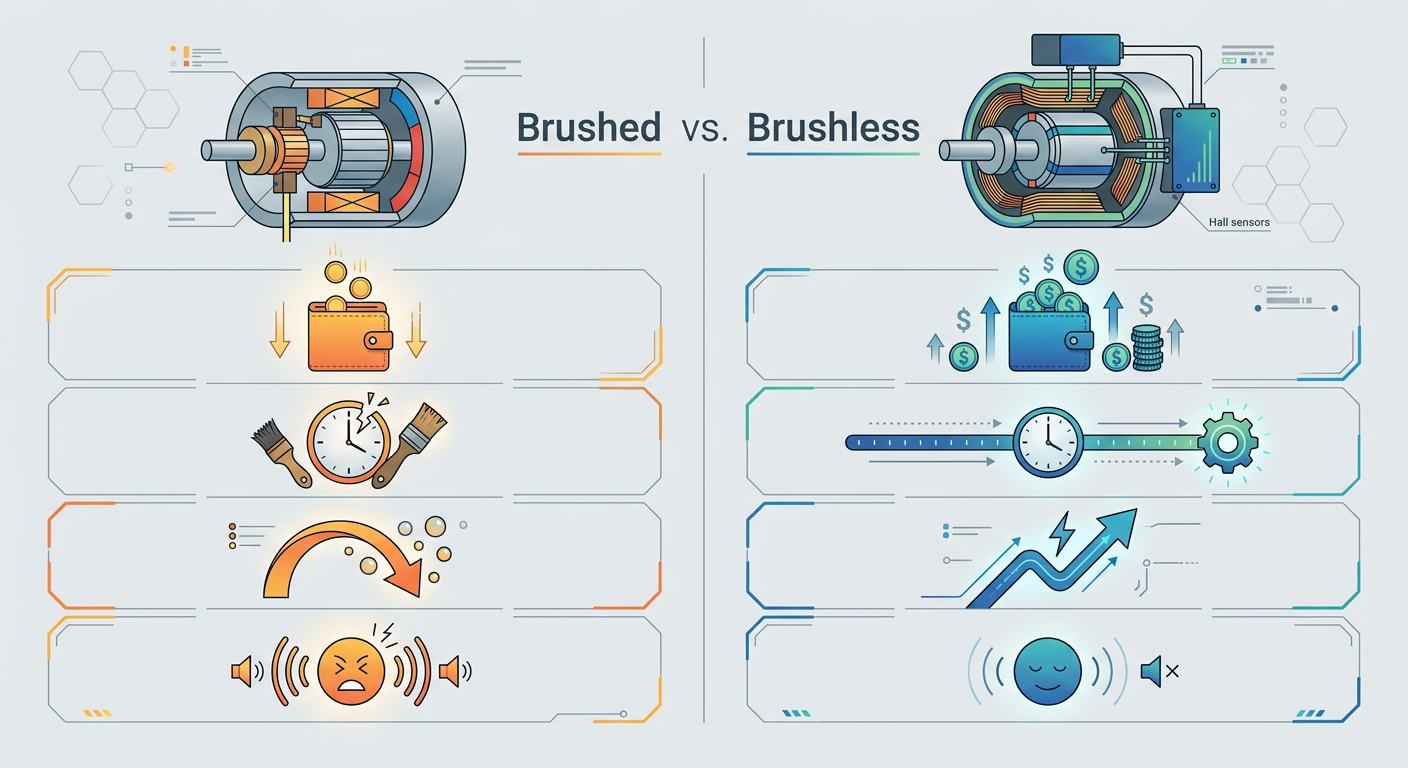
Total Cost of Ownership: Motor Price Is Only the Starting Point
A brushed motor may have a significantly lower purchase price than a comparable brushless motor. However, purchase price alone does not determine which option is more economical over the full product lifecycle.
A useful total-cost comparison should include:
- Motor purchase cost
- Driver and control-electronics cost
- Firmware-development effort
- Energy consumption
- Expected operating hours
- Warranty-return rate
- Field replacement labor
- Shipping and service costs
- Downtime and customer-support impact
Consider an illustrative product that uses a brushed gear motor costing several dollars less than a BLDC alternative. If the motor runs only a few minutes per day and the product is expected to remain in service for two or three years, the brushed version may provide the lower total cost.
If the same mechanism operates for several hours every day and is difficult or expensive to service, a motor failure can quickly erase the original BOM saving. In that situation, the longer potential life and higher efficiency of the BLDC system may justify the additional motor and controller cost.
Brushed motors are often inexpensive to purchase. Brushless motors can be less expensive to own when energy use, warranty exposure, downtime, and replacement labor are included.
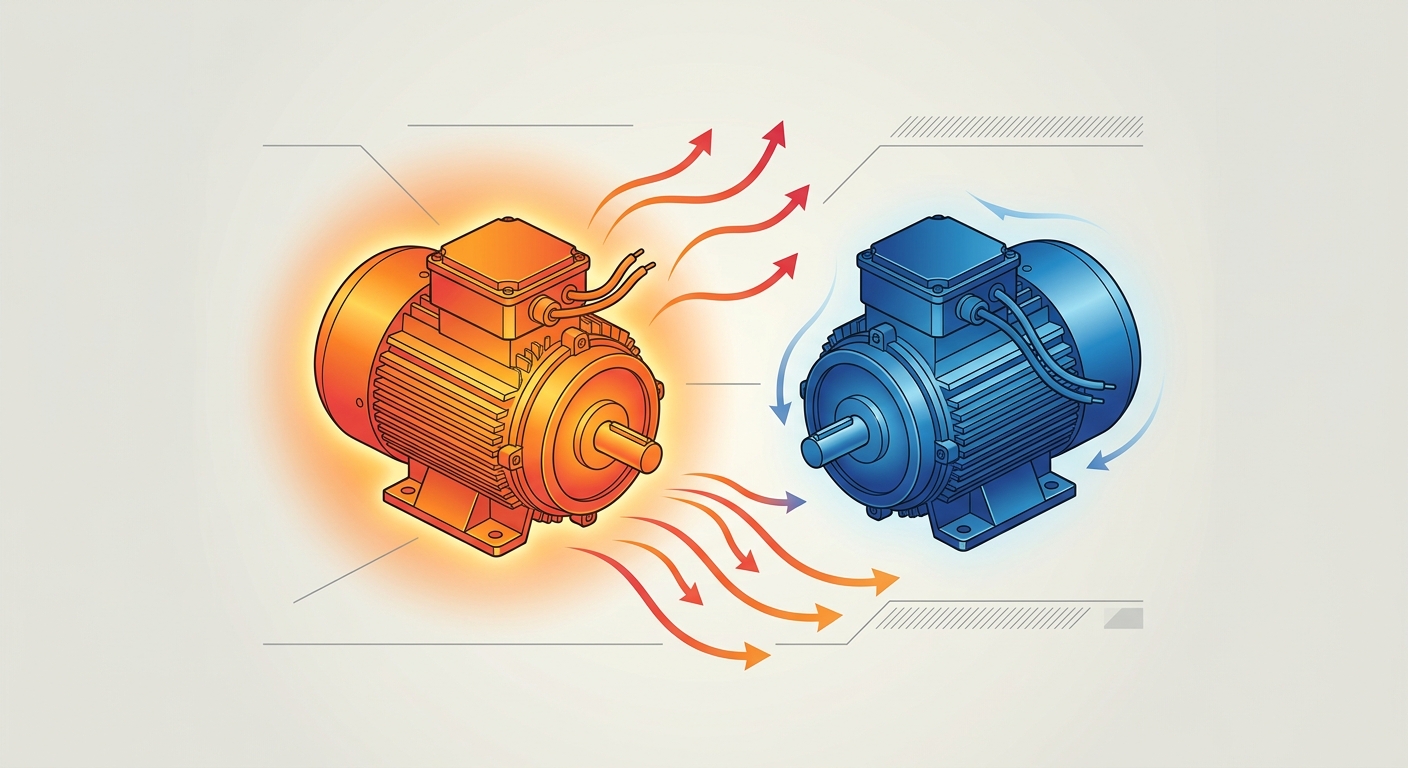
Efficiency and Heat Management
Brushed motors experience electrical and mechanical losses at the brush-commutator interface. Contact resistance, brush friction, winding resistance, bearing friction, and magnetic losses convert part of the input power into heat.
BLDC motors remove brush friction and brush-contact losses. With an appropriate winding, magnetic circuit, driver, and operating point, they can therefore achieve higher efficiency and generate less motor heat for the same useful output.
This difference becomes particularly important in:
- Battery-powered equipment
- Sealed housings
- Medical and laboratory devices
- Compact actuators with limited airflow
- Continuous-duty pumps and fans
- Products with temperature-sensitive components
However, selecting a BLDC motor does not automatically solve every overheating problem. Excessive load, insufficient reduction ratio, repeated stall conditions, poor ventilation, incorrect current limits, or undersized bearings can overheat either motor type.
Before changing motor architecture, review our guide to micro gear motor overheating and practical fixes.
Noise, Vibration, and Electromagnetic Interference
Brushed motors generate electrical arcing as the brushes move between commutator segments. This produces broadband electromagnetic noise that may interfere with nearby sensors, microphones, wireless modules, and analog circuits.
Noise from a brushed motor may come from several sources:
- Brush friction
- Commutator switching
- Rotor imbalance
- Bearing noise
- Gearbox vibration
- Housing resonance
A BLDC motor eliminates brush friction and brush arcing, so it is generally more suitable for noise-sensitive and EMI-sensitive products. The BLDC driver still uses high-frequency switching, however, and poor PCB layout, grounding, cabling, or filtering can create its own electromagnetic interference.
The final noise level depends on the complete drive system, including the motor, driver switching strategy, bearings, gears, load, mounting structure, enclosure, and operating speed.
Applications located near microphones, precision sensors, medical electronics, RF modules, or quiet indoor environments should normally include noise and EMC requirements in the motor specification from the beginning.
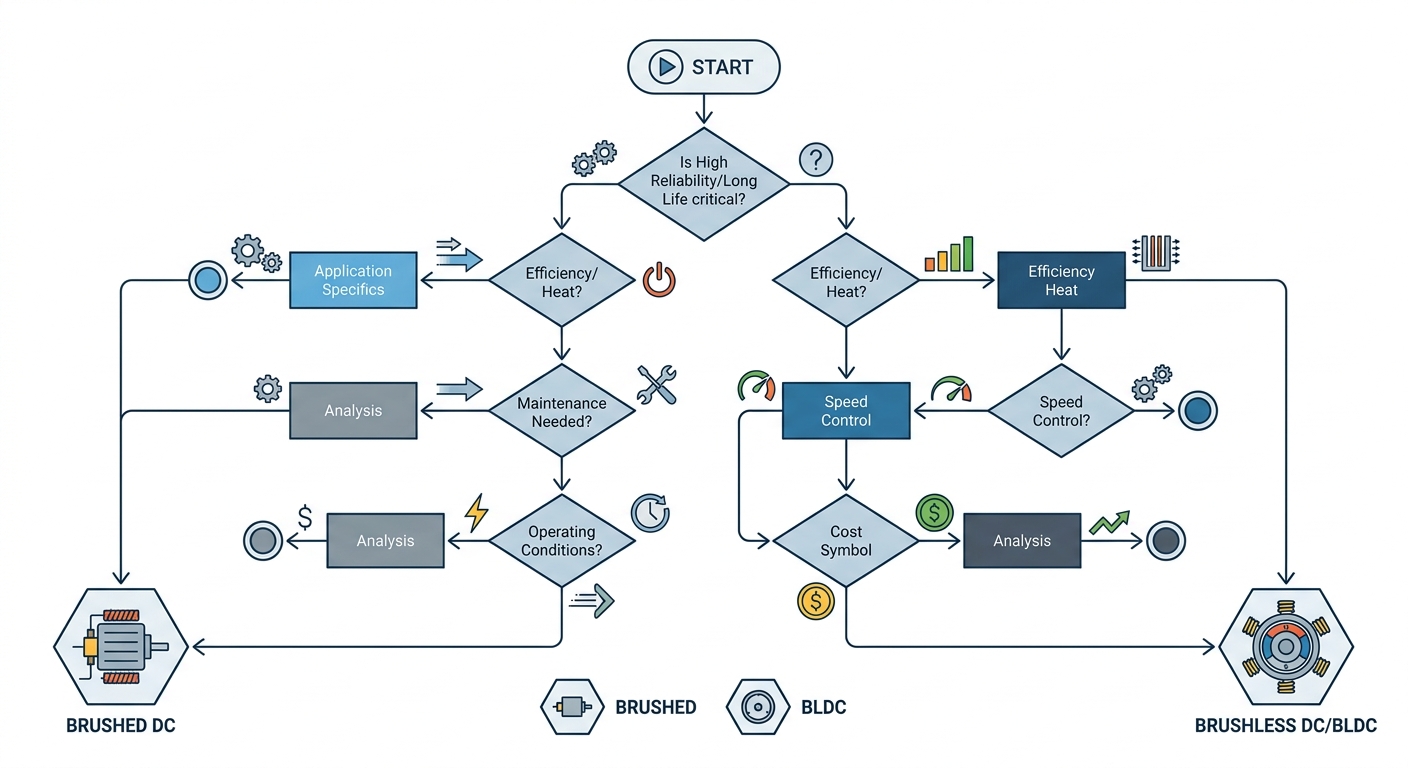
A Seven-Step Brushed vs Brushless Decision Framework
Instead of selecting a motor from a general preference, evaluate the application in the following order.
- Calculate the duty cycle. Determine how long the motor runs per cycle, how often it starts, and the total daily operating time. Short intermittent movement often favors brushed motors, while continuous operation generally strengthens the case for BLDC.
- Estimate the required product lifetime. Convert the expected years of service into estimated total motor operating hours. Compare that figure with realistic motor-life data under the required load and temperature.
- Define the motion-control requirement. Decide whether the product needs simple on/off control, adjustable speed, controlled acceleration, torque regulation, position control, or repeatable stopping.
- Set noise and EMI limits. Consider whether the motor will operate near users, microphones, wireless communication modules, medical sensors, or other noise-sensitive components.
- Review available electronics. Check whether the product already includes an MCU, three-phase driver, Hall-sensor inputs, encoder interface, current sensing, and motor-control firmware.
- Check the mechanical envelope. Include the motor body, gearbox, driver PCB, connectors, encoder, cooling path, shaft support, and cable routing rather than evaluating motor diameter alone.
- Compare total system cost. Combine the motor, gearbox, driver, encoder, firmware, testing, energy use, warranty risk, and expected service cost.
After selecting the architecture, confirm the required torque, speed, voltage, current, reduction ratio, and safety margin. Our guide to torque and speed specifications to check before buying a motor explains the next stage of the selection process.
Applications Where Brushed DC Motors Still Make Sense
Brushed DC motors are not obsolete. They remain a practical and economical choice for many short-duration and cost-sensitive mechanisms.
Electric Locks and Latches
A lock actuator may run for only one or two seconds during each opening or closing cycle. Even when the product remains installed for many years, the motor’s accumulated operating time can remain relatively low.
Vending and Dispensing Mechanisms
Short operating cycles, simple directional control, and strict component-cost targets often make brushed gear motors suitable for vending machines, product dispensers, and compact feeding mechanisms.
Toys and Consumer Products
In many battery-powered toys and low-cost consumer products, the expected usage time and product lifecycle do not justify the cost of a BLDC motor and controller.
Intermittent Actuators
Brushed motors remain useful for valves, door mechanisms, adjustment systems, seat mechanisms, and other actuators that move occasionally and do not need advanced closed-loop control.
Applications Where Brushless DC Motors Are Usually Better
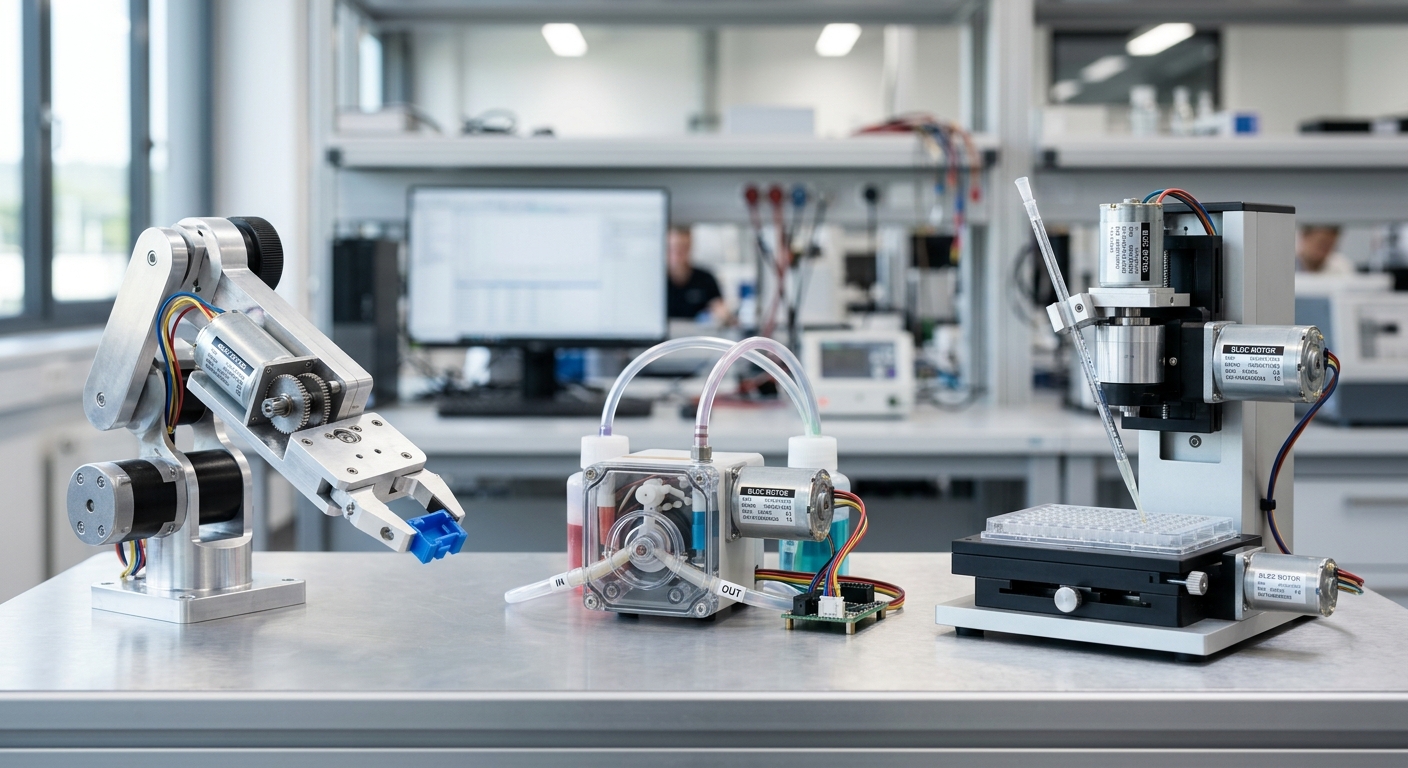
Medical Pumps and Laboratory Instruments
Long operating life, lower electromagnetic interference, predictable speed control, and quieter operation make BLDC motors suitable for many pumps, analyzers, sampling systems, and laboratory automation devices.
Service and Warehouse Robotics
Robotic systems often require high daily operating hours, efficient battery use, controlled acceleration, encoder feedback, and long service intervals. These requirements normally favor BLDC motors.
HVAC Fans and Circulation Equipment
Fans and blowers may operate for extended periods, making efficiency, acoustic performance, and bearing life more important than the lowest initial motor price.
Drones, Gimbals, and Portable Equipment
High power density, low rotor inertia, efficient battery use, and responsive electronic control make brushless motors common in drones, camera systems, handheld equipment, and other compact battery-powered products.
Industrial Automation
Automation equipment that requires repeatable speed, controlled positioning, frequent cycling, and long service life can benefit from BLDC motors with Hall sensors or encoder feedback.
How Motor Type Affects Gearbox Selection
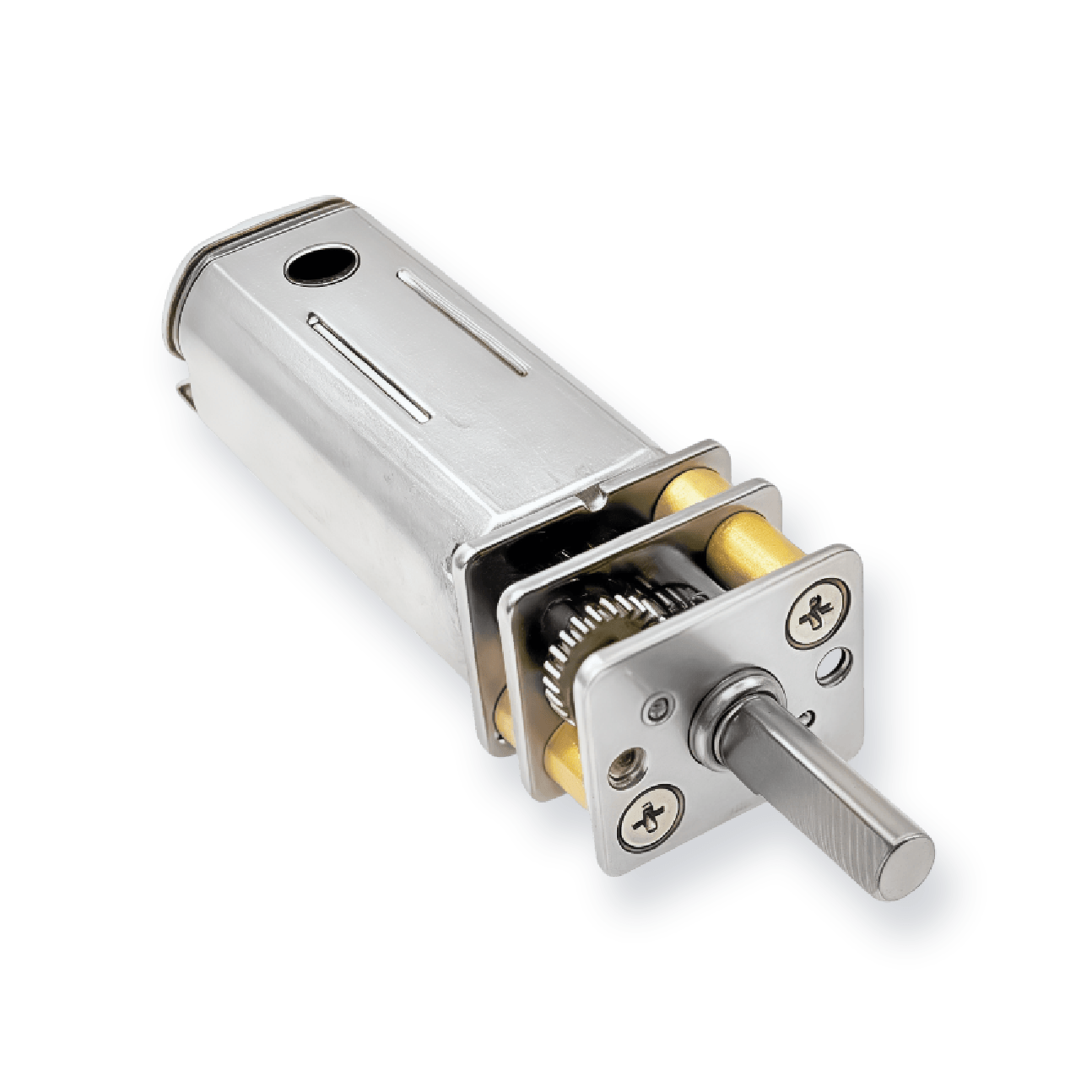
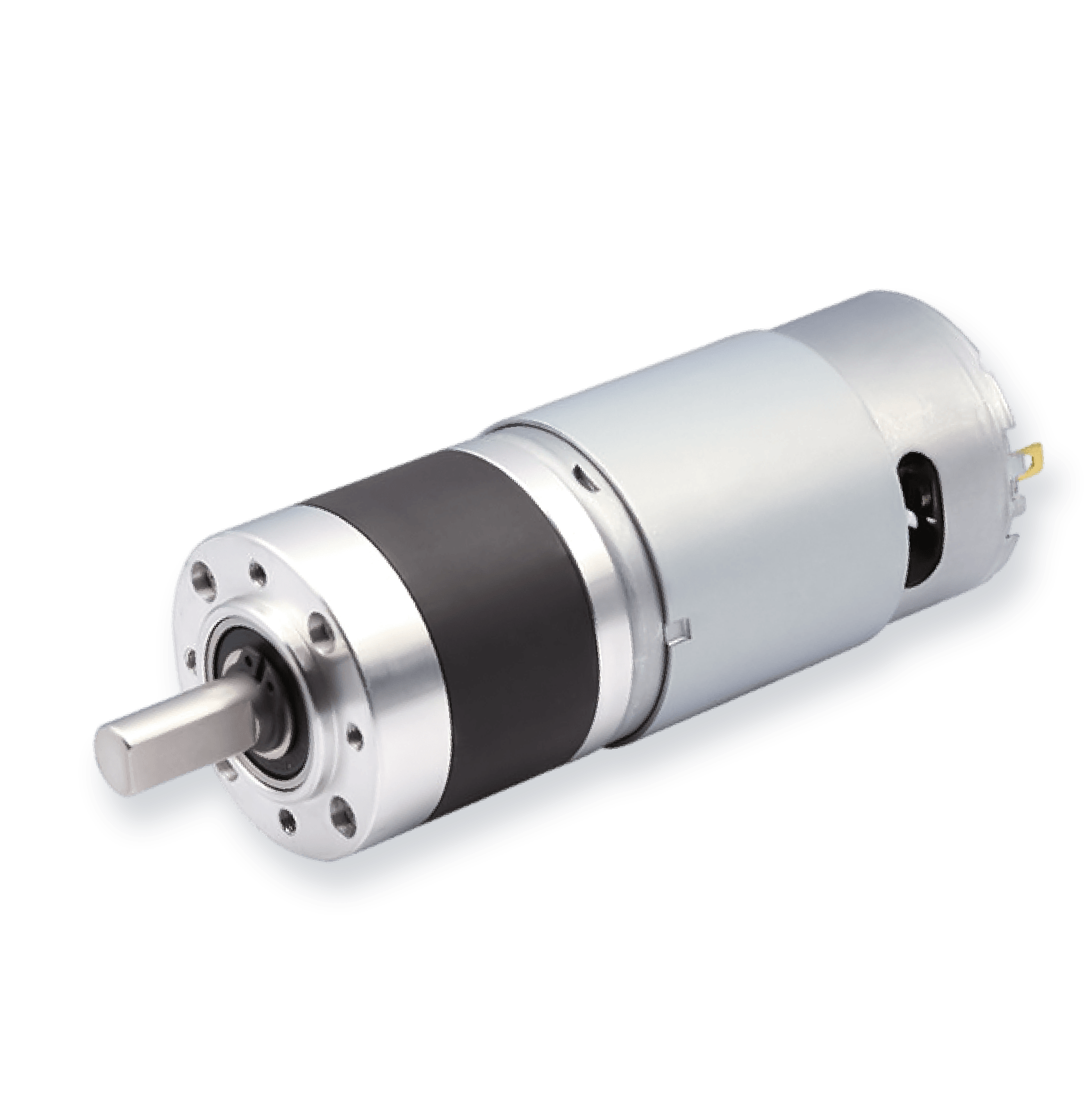
Many compact applications require a gear motor rather than a bare motor. The gearbox changes speed, increases output torque, supports the load, and influences noise, backlash, efficiency, and service life.
Brushed and brushless motors may operate at different preferred speed ranges, so the required reduction ratio should be calculated from the actual motor performance curve rather than selected from motor type alone.
For example, a high-speed motor may need a larger reduction ratio to reach a low output speed. A gearbox with more reduction stages can increase torque, but it may also increase size, backlash, friction, noise, and cost.
The gearbox should be checked for:
- Continuous output torque
- Peak and stall torque
- Input-speed limit
- Radial and axial load capacity
- Backlash
- Efficiency
- Noise
- Expected operating life
Planetary gearboxes are commonly selected when high torque density, compact dimensions, and improved load distribution are required. Spur gearboxes can provide a simpler and more economical solution for moderate loads and cost-sensitive mechanisms.
See our comparison of planetary and spur gearboxes for compact motor designs for more guidance.
Regardless of motor type, excessive shock loading, frequent stalls, poor alignment, or insufficient gearbox capacity can shorten the life of the complete drive assembly. For preventive measures, read how to extend the lifespan of a DC gear motor.
When standard dimensions, ratios, shafts, mounting points, or output arrangements do not fit the mechanism, review when a custom gearbox is more appropriate than a standard motor assembly.
Control Electronics and Feedback Requirements
The motor itself is only one part of the complete motion system. Control electronics can materially affect cost, PCB space, engineering time, performance, and reliability.
Brushed Motor Control
A basic brushed motor can run from a DC supply. A transistor or MOSFET can provide simple switching, while an H-bridge enables bidirectional rotation and electrical braking.
An encoder can be added when the system requires:
- Closed-loop speed control
- Position measurement
- Travel-distance monitoring
- Stall detection
- Repeatable stopping
Therefore, closed-loop control does not automatically require a brushless motor. Brushed motors can also provide accurate controlled motion when paired with suitable feedback and electronics.
Brushless Motor Control
A BLDC motor requires a three-phase driver or integrated controller. Depending on the application, the system may also require current sensing, Hall-sensor inputs, encoder processing, overcurrent protection, thermal protection, and motor-control firmware.
Sensored BLDC motors use Hall sensors or encoders to identify rotor position. They are generally easier to control at startup and low speed.
Sensorless BLDC motors estimate rotor position from back-EMF. They can reduce sensor and wiring requirements, but startup under load and very-low-speed operation may be more difficult.
With an appropriate controller and feedback device, a BLDC system can provide precise speed, torque, and position control. These capabilities come from the complete closed-loop system rather than from the motor alone.
Coreless, Slotless, and Stepper Alternatives
The best motor for an application is not always a standard brushed or slotted brushless design. Some motion requirements are better served by coreless, slotless, or stepper motors.
Coreless Brushed Motors
A coreless brushed motor uses a self-supporting rotor winding without a conventional iron core. The reduced rotor inertia supports rapid acceleration and fast response, while the absence of an iron rotor can reduce cogging.
Coreless brushed motors are often considered for miniature pumps, optical equipment, medical devices, haptic systems, and compact mechanisms requiring responsive motion. They still use brushes, so their service life remains partly brush-limited.
Slotless Brushless Motors
A slotless BLDC motor uses a stator design that minimizes or eliminates the conventional slotted structure. This can reduce cogging torque and support smoother rotation, lower vibration, and improved low-speed behavior.
Slotless BLDC motors may be suitable for surgical tools, precision pumps, optical systems, scanners, and camera mechanisms where smooth motion and low vibration justify the additional cost.
Stepper and Stepper Gear Motors
A stepper motor may be more appropriate when the main requirement is repeatable incremental movement or low-speed positioning.
When correctly sized with sufficient torque margin, a stepper motor can provide repeatable open-loop positioning without an encoder. However, overload or excessive acceleration can cause missed steps, so feedback may still be needed in applications where position loss is unacceptable.
Typical stepper applications include dispensing valves, camera adjustments, miniature stages, printers, laboratory mechanisms, and other controlled incremental-motion systems.
Final Motor Selection Checklist
Before requesting a quotation or approving a motor sample, confirm the following specifications.
- Rated voltage: The available operating voltage and allowable voltage variation
- Required output speed: At the actual working load, not only at no load
- Continuous torque: The torque required during normal operation
- Peak torque: The highest temporary torque during startup, acceleration, or obstruction
- Duty cycle: Run time, stop time, starts per hour, and total daily operating time
- Lifetime target: Required operating hours and expected years in service
- Feedback: None, Hall sensors, magnetic encoder, optical encoder, or another position sensor
- Control mode: On/off, PWM speed, closed-loop speed, torque, or position control
- Gearbox: Type, ratio, backlash, efficiency, output shaft, and load capacity
- Noise limit: Acoustic, vibration, and electromagnetic requirements
- Environment: Temperature, humidity, dust, liquid exposure, sterilization, and vibration
- Mechanical interface: Diameter, length, shaft, mounting holes, connectors, and cable direction
- Annual quantity: Prototype, pilot production, and expected mass-production volume
Supplying these details allows the motor manufacturer to evaluate the motor, winding, gearbox, encoder, driver, and mechanical interface as one integrated system.
Frequently Asked Questions
Is a brushless DC motor always better than a brushed motor?
No. A brushless motor generally offers longer life, higher efficiency, and lower brush-related noise, but it also requires more complex electronics and usually has a higher initial cost. A brushed motor may be the more economical solution for short-duty and price-sensitive products.
Can a brushed DC motor use an encoder?
Yes. A brushed motor can be combined with a magnetic or optical encoder for closed-loop speed control, positioning, motion monitoring, and stall detection. Closed-loop control is not limited to brushless motors.
Does every BLDC motor need Hall sensors?
No. A BLDC motor can use Hall sensors, an encoder, or sensorless back-EMF detection. Hall sensors are useful for reliable startup and low-speed control, while sensorless systems can reduce wiring and component count in suitable applications.
Which motor type is better for battery-powered equipment?
BLDC motors are often preferred when efficiency directly affects operating time. However, a low-duty battery product may still achieve a lower total cost with a brushed motor. The correct choice depends on load, runtime, battery capacity, control electronics, and required service life.
When should I choose a stepper motor instead?
A stepper motor may be a better fit when the application primarily requires controlled incremental motion or repeatable low-speed positioning. The motor must still be sized with sufficient torque margin to prevent missed steps.
Putting It All Together
Brushed DC motors remain a strong choice for intermittent, simple, and cost-driven products. Brushless DC motors are generally better suited to continuous-duty, long-life, efficient, quiet, and precision-controlled equipment.
A useful first calculation is to estimate the motor’s total operating hours over the expected product lifetime. Low accumulated runtime may support a brushed design. High accumulated runtime, difficult field replacement, strict noise limits, or demanding efficiency targets usually strengthen the case for BLDC.
Do not make the final decision from motor price or rated efficiency alone. Compare the complete system, including the gearbox, driver, feedback device, firmware, operating temperature, mechanical loads, energy use, warranty exposure, and expected service conditions.
SLW Motor supplies compact brushed, brushless, coreless, stepper, gearbox, encoder, and driver configurations for OEM integration. You can browse our compact motor range or send us your voltage, torque, speed, duty-cycle, size, and lifetime requirements for a suitable motor recommendation.